Molecular Contacts
Molecular contacts have driven a paradigm shift in high-efficiency perovskite solar cells by enabling precise control over charge extraction and significantly reducing interfacial losses. Through tailored energy-level alignment and defect passivation, they have contributed decisively to record power conversion efficiencies. Despite this progress, fundamental questions remain regarding their effective surface coverage on oxide electrodes, interfacial uniformity, and long-term operational stability—issues that currently limit reliable device integration and scalability.
Our research addresses these challenges by developing chemically and electronically well-defined molecular interfaces that combine molecular design principles with semiconductor device physics. We aim to establish molecular contacts that are not only performance-enhancing but also robust, reproducible, and compatible with scalable manufacturing.
Molecular contacts as a unifying interfacial design paradigm
Overcoming the intrinsic interfacial limitations of perovskite optoelectronics requires a shift from conventional bulk transport layers toward molecularly engineered contacts that integrate precise chemical control with targeted electronic functionality. These contacts, based on organic molecules or organic–inorganic hybrid materials, enable covalently anchored, ultra-thin, and chemically stable interfaces with tunable optoelectronic properties.
In our work, molecular contacts serve as a unifying interfacial design paradigm, bridging molecular chemistry, materials science, and device engineering. We categorize them into three distinct yet complementary classes:
-
Self-Assembled Monolayers (SAMs):
Chemically robust, molecularly thin layers used for precise energy-level alignment and work-function tuning on transparent conductive oxides (TCOs), enabling efficient and selective charge extraction. -
Low-Dimensional Perovskites (LDPs):
Organic–inorganic hybrid interlayers that act as structural templates, passivation layers, or energetic barriers, enhancing interfacial stability while controlling charge blocking and extraction. -
Small Molecules:
Tailored organic or hybrid molecules incorporated at critical interfaces to suppress non-radiative recombination and mitigate interfacial defect states.
Our long-term vision is to establish molecular contacts as a foundational interfacial strategy for perovskite optoelectronics, applicable across single-junction, tandem, and module-level devices. Achieving this requires researchers trained to operate across disciplinary boundaries.
Related Publications
Joule (2026) 102636
Energy Environmental Science (2026) 19 (14): 4582–4596.
Advanced Energy Materials (2026): e70962
Chem 2026, 102965
EES Solar 2026, 2, 413-424
Joule 2025, 102227
Joule 2025, 102009
Advanced Energy Materials 2025, 2404617.
Joule 9.1 (2024).
Advanced Energy Materials 2024, 2403530
Joule 8, 2585–2606. (2024)
Involved Researchers

Annabel Saar
Butenandtstr. 5 - 13
Room E3.005
81377 München
Phone +49 89 2180-77608
Email: annabel.saar@taltech.ee
Molecular contacts for the front electrodes of perovskite-silicon tandem solar cells

Anna Backeberg
Butenandtstr. 5 - 13
Room E3.005
81377 München
Phone +49 89 2180-77608
Email: anna.backeberg@campus.lmu.de
Photoluminescence studies on FAPbI3-based solar cells (Jointly supervised by Aydin and Laquai Groups)
Formerly F-Praktiukm student, and now MSc student at Max Planck Institute for Polymer Research in Mainz

Ali Buyruk
Butenandtstr. 5 - 13
Room E3.005
81377 München
Phone +49 89 2180-77608
Email: ali.buyruk@cup.lmu.de
High-efficieny perovskite-based solar cells with enhanced thermomechanical stability
Formerly a Postdoctoral Researcher in Aydin Group

Rik Hooijer
Butenandtstr. 5 - 13
Room E3.005
81377 München
Phone +49 89 2180-77608
Email: rik.hooijer@cup.uni-muenchen.de
Selad assembled monolayers for efficient and stable multijunction solar cells
Formerly a Postdoctoral Researcher in Aydin Group, now a Postdoctoral Researcher in University of Victoria, Canada

Jian Huang
Butenandtstr. 5 - 13
Room E3.005
81377 München
Phone +49 89 2180-77608
Email: jian.huang@cup.uni-muenchen.de
Ultra-efficient perovskite/silicon tandem solar cells

Shaoke Liu
Butenandtstr. 5 - 13
Room E3.005
81377 München
Phone +49 89 2180-77608
Email: Shaoke.Liu@campus.lmu.de
Improving the homogeneity of self-assembled molecular monolayer contacts for peovskite-based solar cells
Formerly a F-Praktium Student in Aydin Group, and now Continuing to MSc at LMU

Skirmantas Musteikis
Butenandtstr. 5 - 13
Room E3.005
81377 München
Phone +49 89 2180-77608
Email: skirmantas.musteikis@ktu.lt
Molecular design of charge transport materials for efficient Pb-Sn perovskite devices
Formerly a Visiting Student via Erasmus+ in Aydin Group, and now Continuing to MSc at Kaunas Uni. of Tech.

Brooke Spraggon
Butenandtstr. 5 - 13
Room E3.027
81377 München
Phone +49 89 2180-77617
Email: B.Spraggon1@newcastle.ac.uk
Fundamental understanding of molecular contact coverage on metal oxide surfaces.
Formerly a visiting student in Aydin Group, and now student at Newcastle University in UK

Noah Straughan
Butenandtstr. 5 - 13
Room E3.027
81377 München
Phone +49 89 2180-77617
Email: 2775561S@student.gla.ac.uk
Radiation hardness of the charge-selective contacts for enhanced stability of solar cells in space environments
Formerly he was visiting student in Aydin Group, now returned to finish MSc at University of Glasgow
Related News
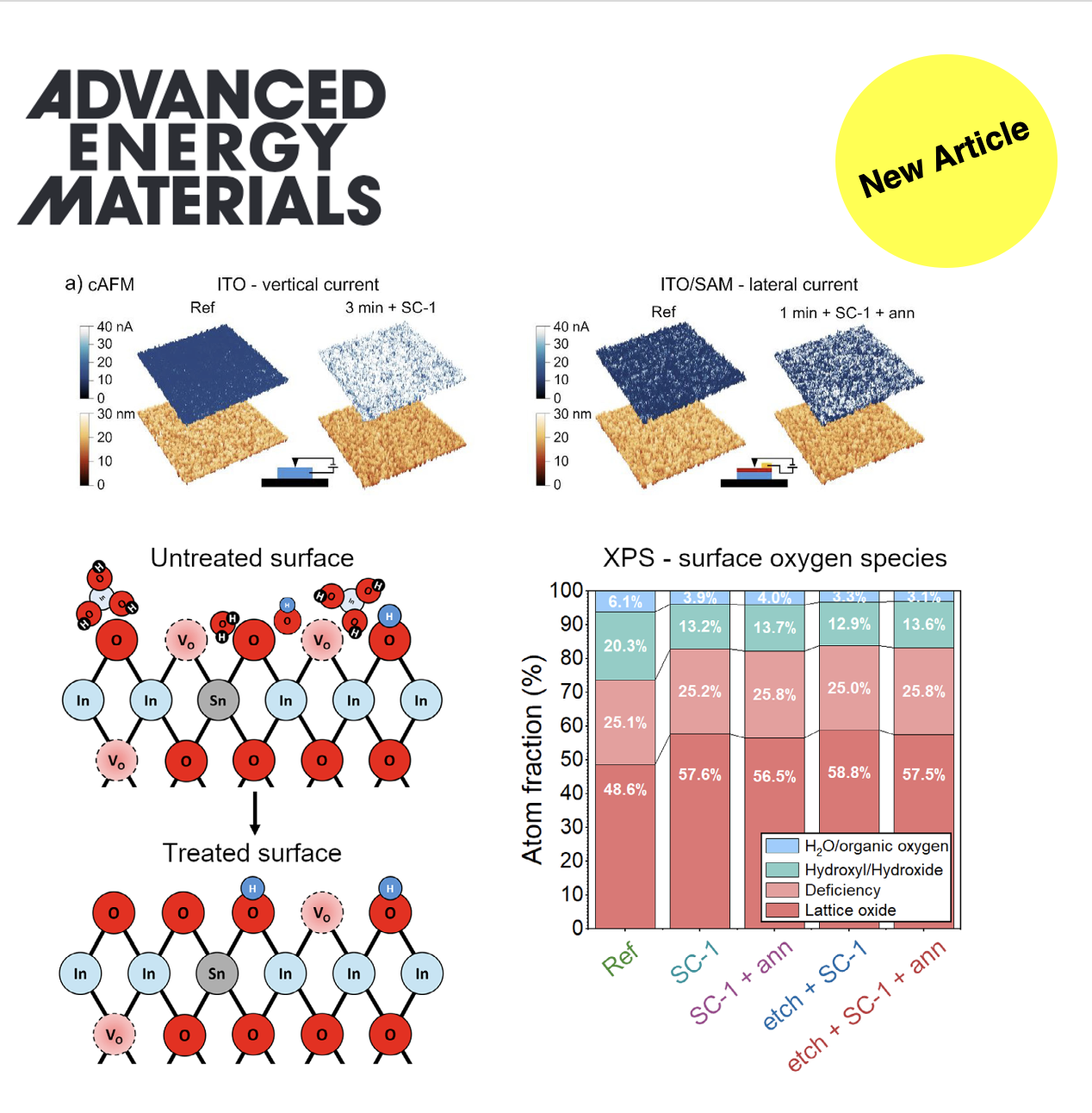
Our recent work shows how surface hydroxylation controls the formation of SAM, strongly influencing the performance and stability of perovskite cells
Read more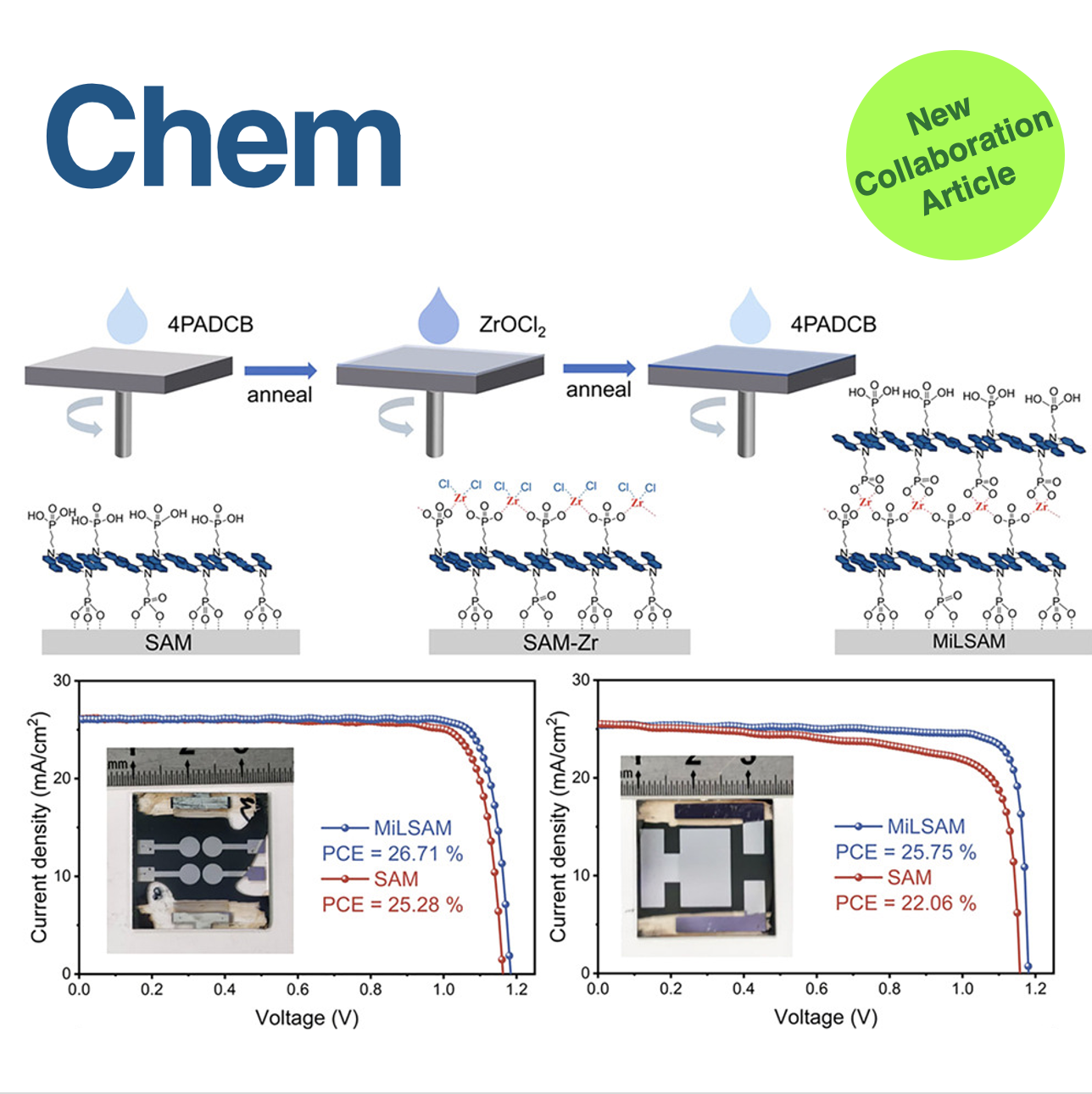
New Publication on Robust SAM Contacts for Perovskite Solar Cells in Collaboration With Prof. Zhijun Ning's Group at ShanghaiTech University
Read more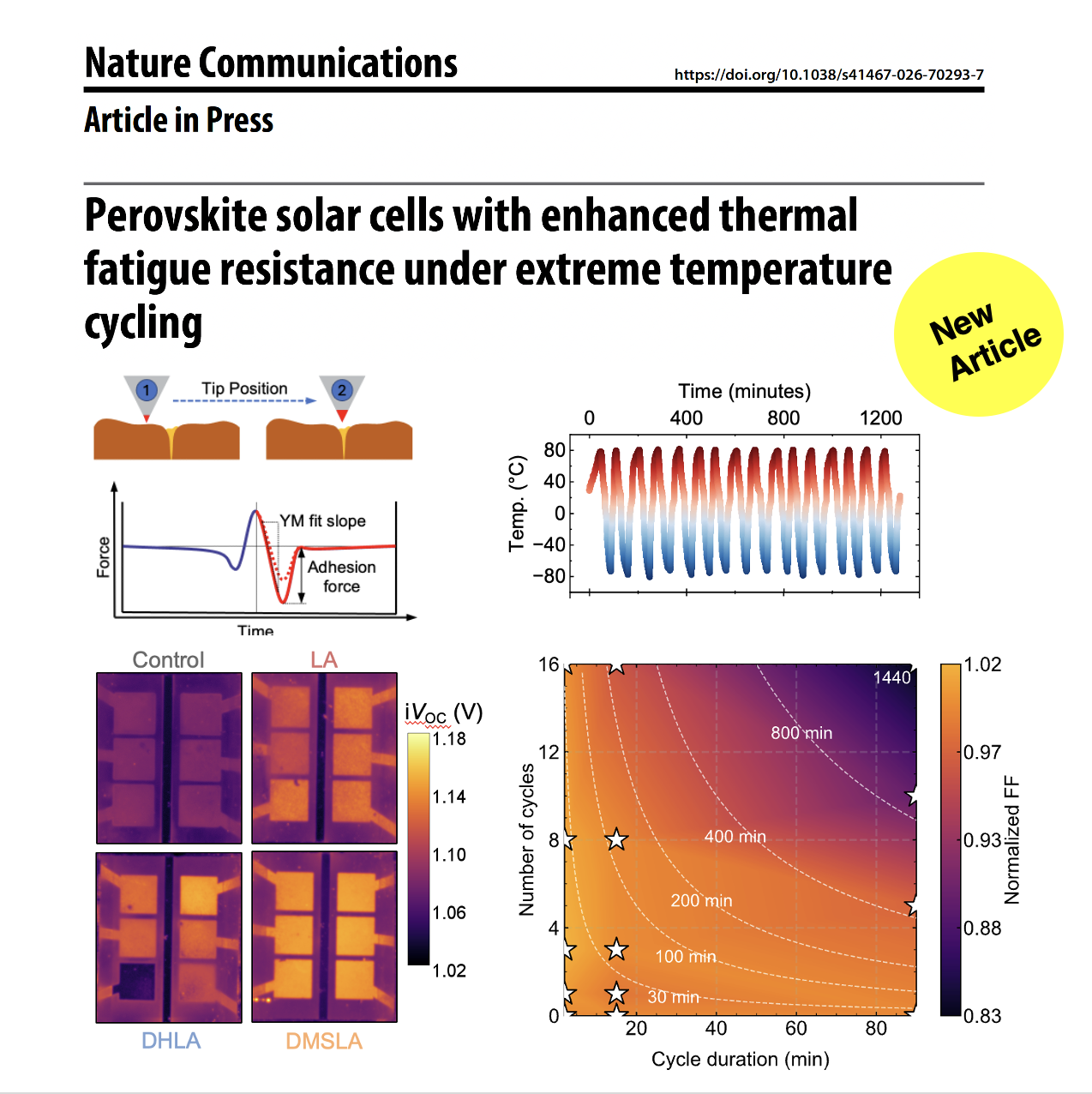
Our New Publication in Nature Communications: Improving Thermal Fatigue Resistance of Perovskite Solar Cells for Space
Read more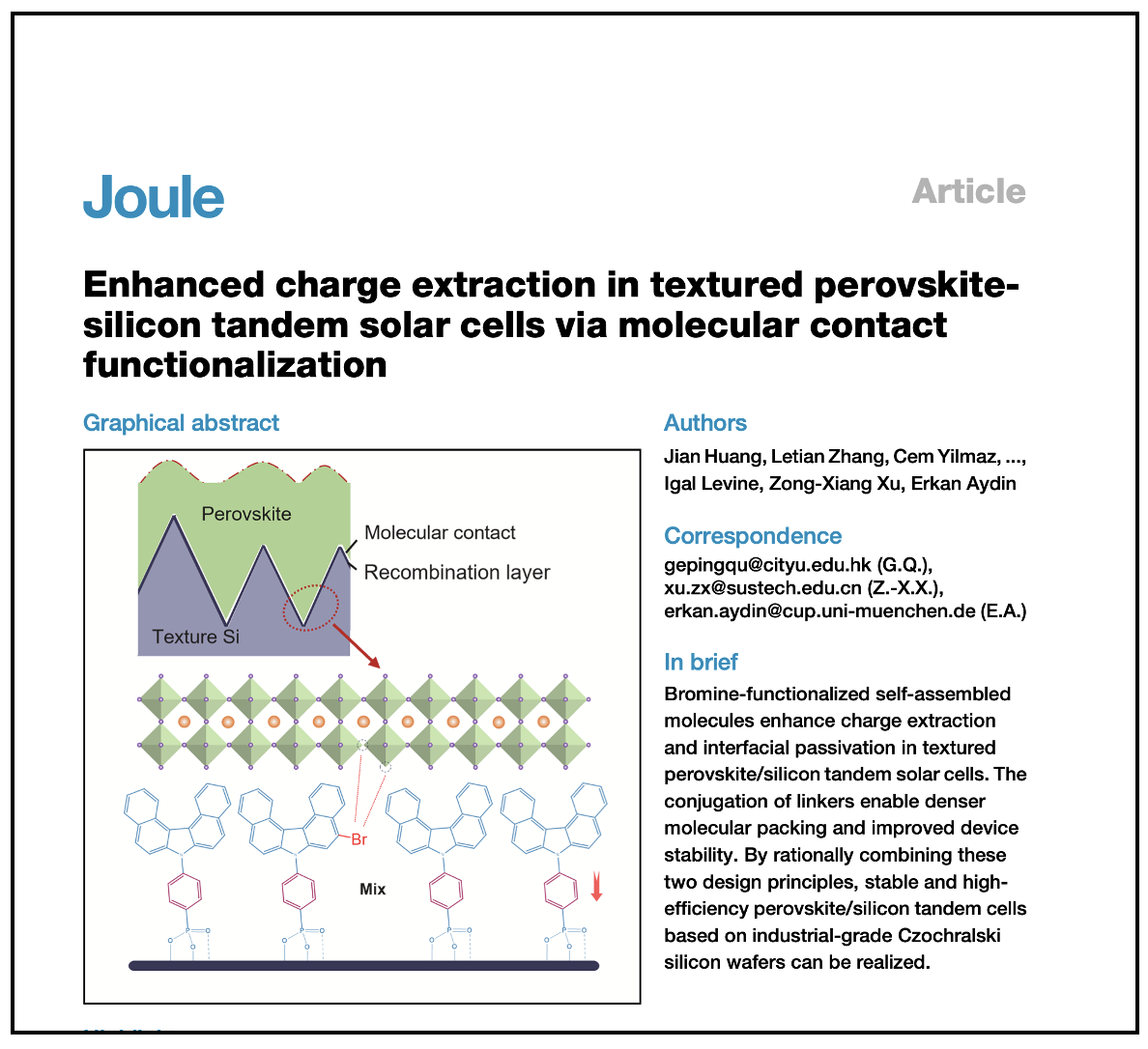
New Publicaiton in Joule: Halogen-Enhanced Conjugated SAMs Enable Improved Charge Extraction in Textured Tandem Architectures
Read more