Thin Film Mechanics
Why Thermal Fatigue Matters
Space environments expose solar cells to some of the most severe temperature fluctuations experienced by electronic materials. During each orbit, spacecraft components repeatedly transition between intense solar irradiation and deep shadow, leading to rapid temperature swings that can exceed −100 °C to +100 °C, depending on the orbit and spacecraft design.
In Low Earth Orbit, satellites typically experience thermal cycling every ~90 minutes as they move in and out of sunlight. Other orbital regimes, such as Geostationary Orbit and deep-space missions, can impose different but equally demanding thermal stresses due to long-duration exposure to solar heating or extended periods of shadow.
These temperature variations generate thermomechanical stress in multilayer devices. Because each material layer has a different coefficient of thermal expansion, repeated cycling leads to strain accumulation. Over time this can cause:
-
interfacial delamination
-
crack formation along grain boundaries
-
mechanical degradation of functional layers
Understanding and mitigating these failure mechanisms is critical for the reliability of thin-film technologies used in space.
From Space to Earth Applications
While space provides a strong motivation, thermal fatigue is also highly relevant for terrestrial energy technologies. Thin-film devices used in outdoor environments experience daily and seasonal temperature fluctuations that can gradually degrade interfaces and encapsulation layers.
Our research therefore focuses on universal failure modes of thin-film interfaces under extreme thermal conditions. By identifying the mechanical limits of materials and interfaces, we aim to develop design strategies that improve device durability across a wide range of applications.
Mechanical Testing and Experimental Platforms
To investigate these phenomena, we have established a universal thin-film mechanics testing platform that enables quantitative measurements of interfacial adhesion and fracture behavior.
Our laboratory performs a range of standardized mechanical tests, including:
-
Pull-off adhesion tests
-
90° peel tests
-
Lap shear tests
-
Double cantilever beam (DCB) fracture tests
These methods allow us to extract key mechanical parameters such as adhesion energy, fracture toughness, and interfacial strength across different length scales.
Combined with controlled thermal cycling protocols and materials characterization, these measurements provide fundamental insights into how interfaces fail under extreme conditions—and how they can be engineered to remain stable.
Related Publications
Joule (2026) 102636
Advanced Energy Materials (2026): e70962
Nature Communications, 2026, 17, 3669
Nature Communications 2026, 17, 596
Involved Researchers

Diego López Pascual
Butenandtstr. 5 - 13
Room E0.050
81377 München
Phone +49 89 2180-77535
Email: d.lopezp@uah.es
Thermal fatigue analysis of perovskite-based multijunction solar cells in space environments.

Tara Makoei
Butenandtstr. 5 - 13
Room E3.005
81377 München
Phone +49 89 2180-77608
Email: T.Bagherbeik@campus.lmu.de
Investigation of Thermal Stress Resilience in Perovskite Solar Cells
Now Tara continues at LMU Munich as student

Àlvar Martin Pelacho
Butenandtstr. 5 - 13
Room E3.005
81377 München
Phone +49 89 2180-77608
Email: alvar.martin@tum.de
Multiphysics Modeling of Thermal Cycling-Induced Stress and Failure in Solar Cells for Low Earth Orbit Use
Formerly a MSc student in Aydin Group, now a trainee at ACER (Ljubljana, Slovenia)

Nikil Magesh
Butenandtstr. 5 - 13
Room E3.027
81377 München
Phone +49 89 2180-77617
Email: nikil.magesh@tum.de
Vibration-Induced Stress and Failure Analysis of Perovskite–Silicon Tandem Solar Cells for Low Earth Orbit CubeSats
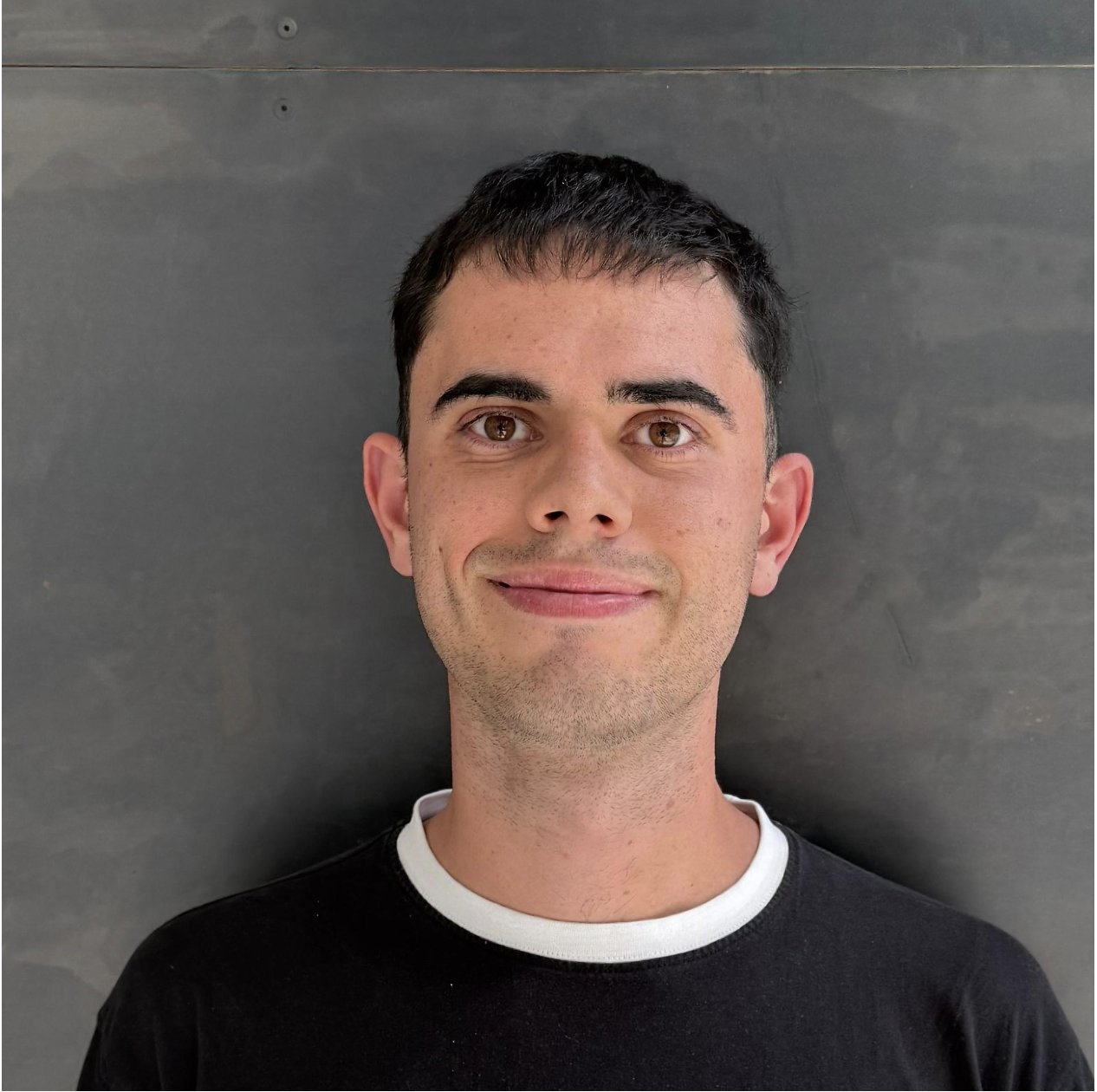
Óscar Manzano Narro
Butenandtstr. 5 - 13
Room E0.050
81377 München
Phone +49 89 2180-77535
Email: oscar.manzano@uah.es
High-Temperature Power Tracking of Perovskite-Based Multijunction Solar Cells in Simulated Space Environments
Formerly a visiting student in Aydin Group, and now continue his PhD in Alcalá University, Spain

Rahmi Eren Cakir
Butenandtstr. 5 - 13
Room E0.019
81377 München
Phone +49 89 2180-77535
Email: cakir.rahmi@metu.edu.tr
Thin-foil interconnection strategies and their electrical, optical, and thermomechanical reliability
Formerly a visiting student in Aydin Group, and now continue his bachelor at METU, Turkiye

Cem Yilmaz
Butenandtstr. 5 - 13
Room E3.005
81377 München
Phone +49 89 2180-77608
Email: cem.yilmaz@cup.uni-muenchen.de
Thermomechanical analysis of multijunction solar cells
Related News
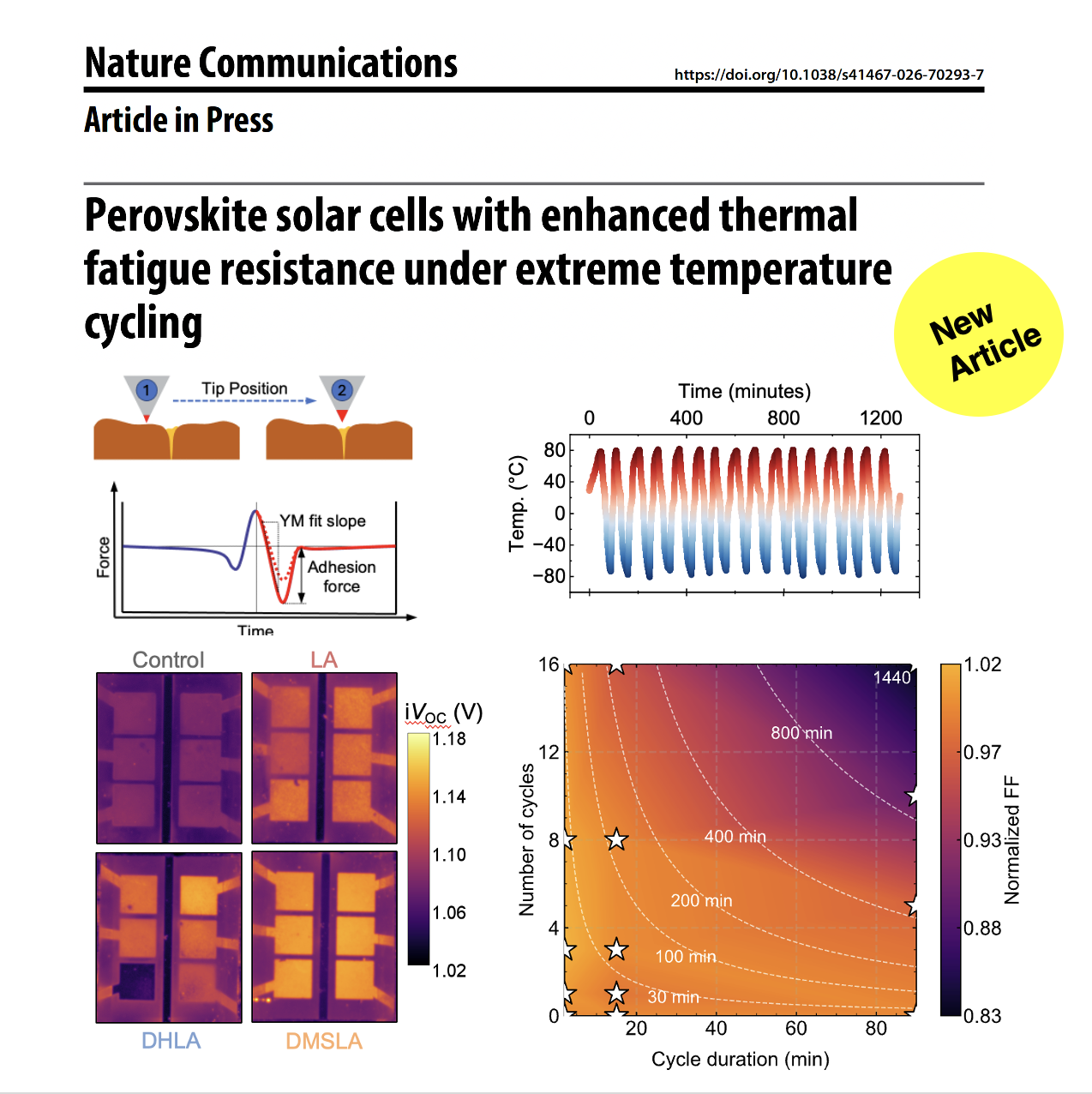
Our New Publication in Nature Communications: Improving Thermal Fatigue Resistance of Perovskite Solar Cells for Space
Read more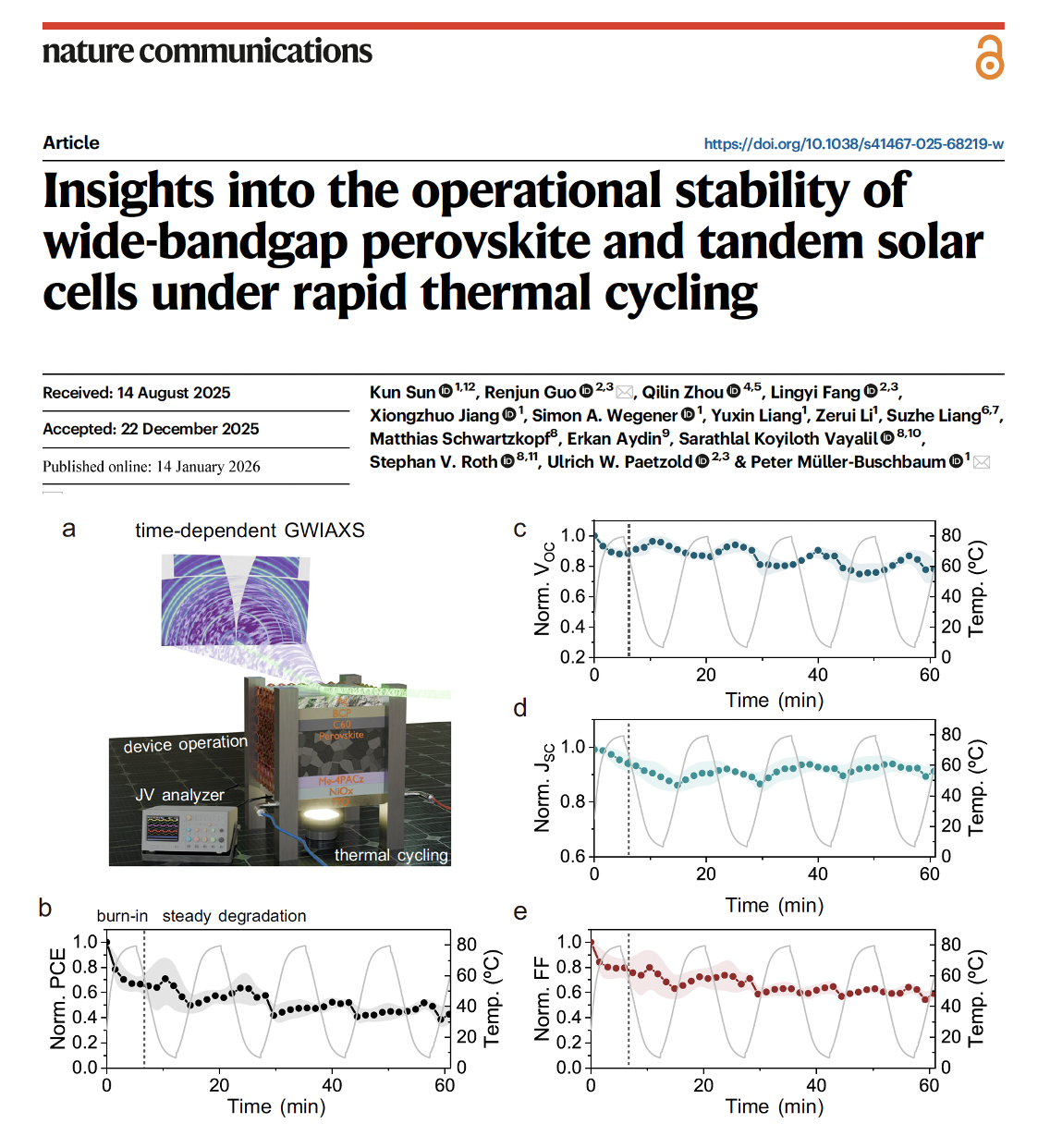
Our Recent Collaboration Reveals Understanding Thermal Stability of Wide-Bandgap Perovskite and Tandem Solar Cells under Rapid Thermal Cycling
Read more